This guide looks at turn a hairstyle app preview into a clear salon reference as a practical comparison, with attention to shape, texture and the choices to discuss before a salon visit.
Choose references that answer a question
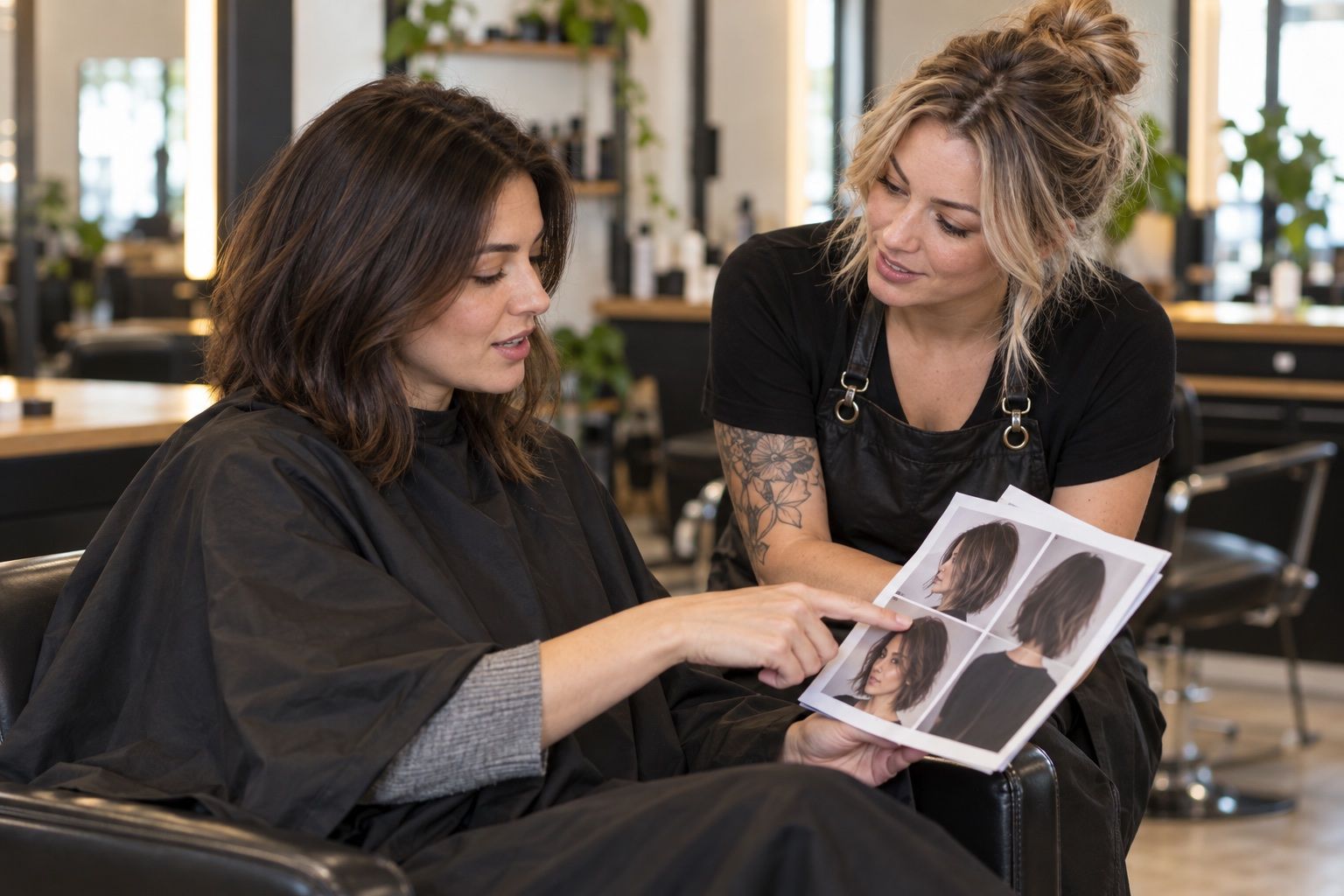
A useful salon reference shows a specific feature you want to discuss: length, fringe, perimeter, face-framing pieces or overall volume. Choose one or two images rather than a large album of contradictory looks. If the image came from a virtual try-on, say so and explain which part reflects your preference. This gives the stylist context for interpreting the composite.
Select photos with hair texture and starting length somewhat similar to yours when possible. A perfect match is rare, so point out which differences matter. One image may show the outline while another shows the texture or back shape. Tell the stylist which detail to take from each instead of asking them to reproduce every feature at once.
Add plain-language notes
Write a sentence beside each image describing what you like and what you want changed. “Keep the length near my shoulders, add soft framing around the cheek, and leave enough front hair to tuck” is more actionable than “make it like this.” Mention whether the image is an aspiration, a rough preview or a style you already wear.
Include limits too: no daily heat styling, retain enough length for a ponytail, avoid hair falling into the eyes, or keep the neckline soft. These constraints help a stylist propose a cut that suits your routine. A reference should communicate priorities and allow professional adaptation, not function as a rigid specification.
Show more than one angle
A front image may hide the profile, nape and crown. Bring a side or back photograph if those areas matter, or ask the stylist to explain how the front-facing reference translates to the full shape. If your preview app only produces a front composite, do not assume the unseen parts have been designed.
Use a recent image of your current hair from the side if it helps show length and growth pattern. A stylist can compare it with the inspiration and discuss what needs to change. Keep the set small: one current photo and a few purposeful references are easier to review than many near-duplicates.
Explain your normal routine
Describe how you wash, dry and style your hair on a typical day. Mention heat tools, diffusing, air-drying, tying it back and how much time you want to spend. A reference image may show a finish that requires a routine you do not follow. This context helps the stylist recommend a version that works beyond the appointment.
Say what you like and dislike about your current haircut. Perhaps the ends feel heavy, the fringe needs constant adjustment, or the length no longer fits your schedule. These observations connect the reference to a practical goal. They also help the stylist distinguish a visual preference from a problem you want the cut to solve.
Ask about feasibility and trade-offs
Invite the stylist to explain which parts of the reference are feasible with your current length, texture and density. Ask what would require extra styling, a longer grow-out or a maintenance appointment. If the preview changes hairline or volume, mention that it is a visual aid and ask what the equivalent real cut would look like.
A good consultation may produce a version that differs from the image. The stylist can preserve the feature you like while adjusting length or layering for your hair. Ask to agree on the amount to remove before cutting, especially if the change is substantial. Clear discussion reduces surprises and keeps the decision collaborative.
Separate haircut goals from color goals
If the reference includes a different color, point out whether you want to discuss the cut, the color or both. Changing several elements at once can make it harder to identify the source of the look. Color work may involve separate maintenance, cost and timing, so it is useful to decide whether it belongs in the current appointment.
For a virtual preview, note that screen color can shift with brightness and lighting. Do not use the composite as a precise color formula. Bring a separate color reference if needed and ask a professional to explain what is achievable for your starting shade and hair condition. Keep the haircut conversation clear by naming each goal independently.
Leave with a shared plan
Before the appointment ends, repeat the agreed details: length, fringe, perimeter, layers and expected styling. Ask what will be removed today and which parts can be adjusted later. If the plan includes a new routine, make sure you understand the basic steps and time involved. A short recap helps confirm that you and the stylist mean the same thing by a style name.
Keep the reference and notes for future visits, but update them if your preferences change. A haircut evolves as it grows, and the next appointment may focus on refining rather than repeating the original plan. A good image reference is a communication aid that supports an ongoing conversation about what works for your hair.
Confirm the details before the first cut
Before the stylist begins, repeat the agreed length and the areas where you want flexibility. If the change is significant, ask for a check-in after the initial section is cut or before more length is removed. This is especially helpful when a virtual preview gave you a rough idea but could not account for your texture and growth pattern.
Make sure both of you share the same meaning for terms such as “long layers,” “soft fringe” or “chin-length.” Point to the relevant part of the reference and describe the landmark you have in mind. Clear words and a short confirmation help prevent style labels from being interpreted differently.
If you are unsure about a technical term, ask the stylist to restate the plan using visible landmarks such as jaw, shoulder or eyebrow. You can then confirm that the image and the spoken description match. This small check is especially useful when a digital preview exaggerates the length or smoothness of the hair.