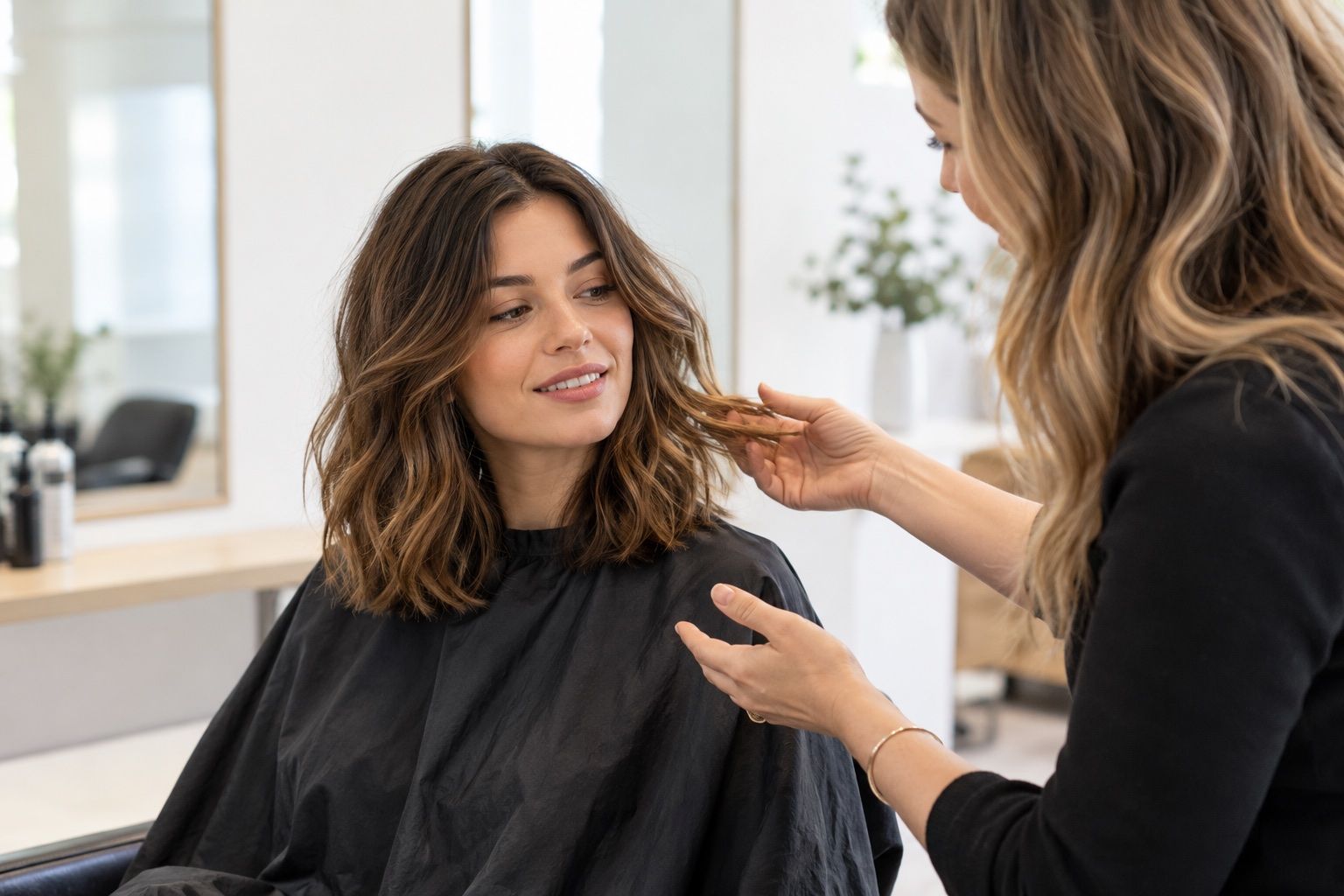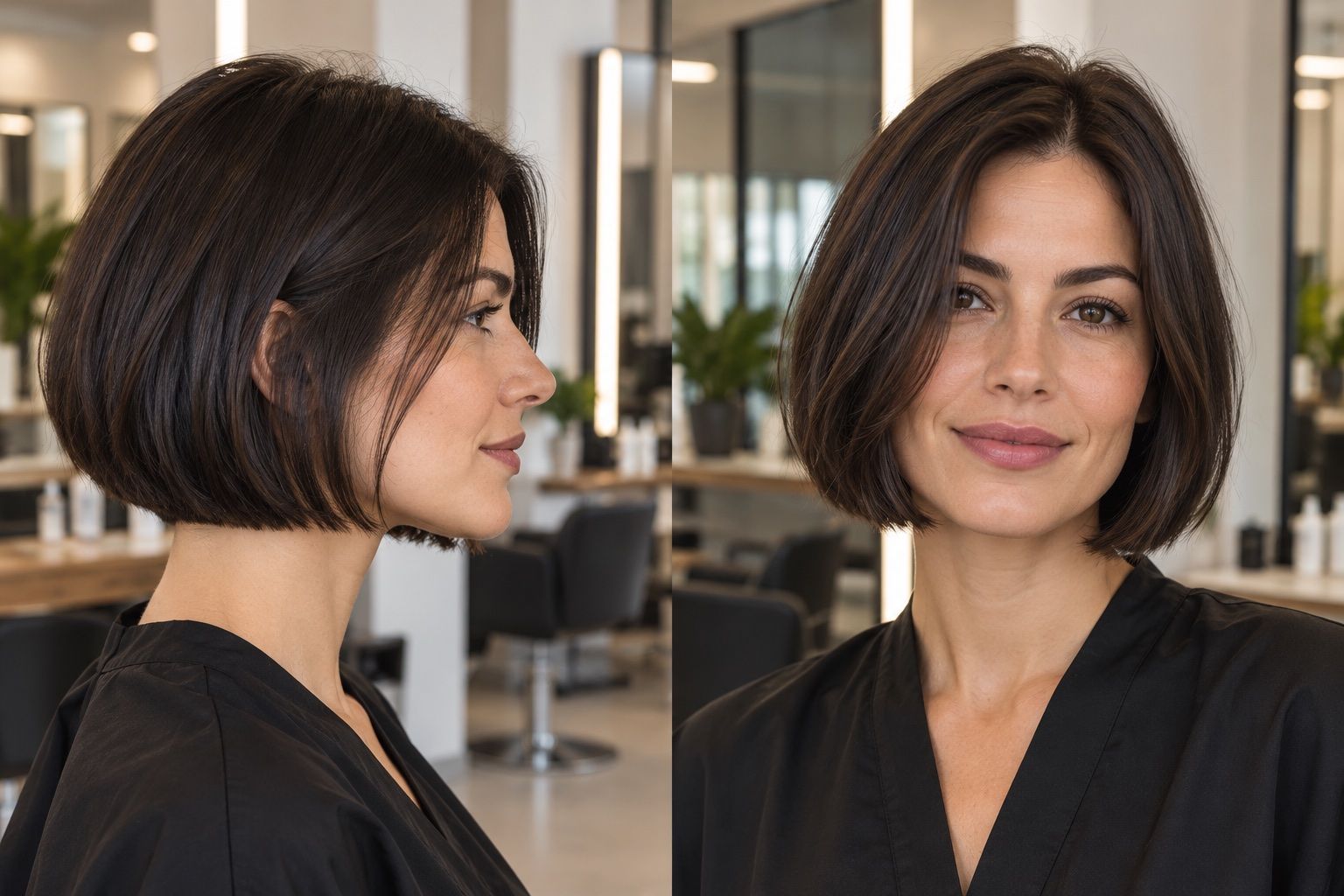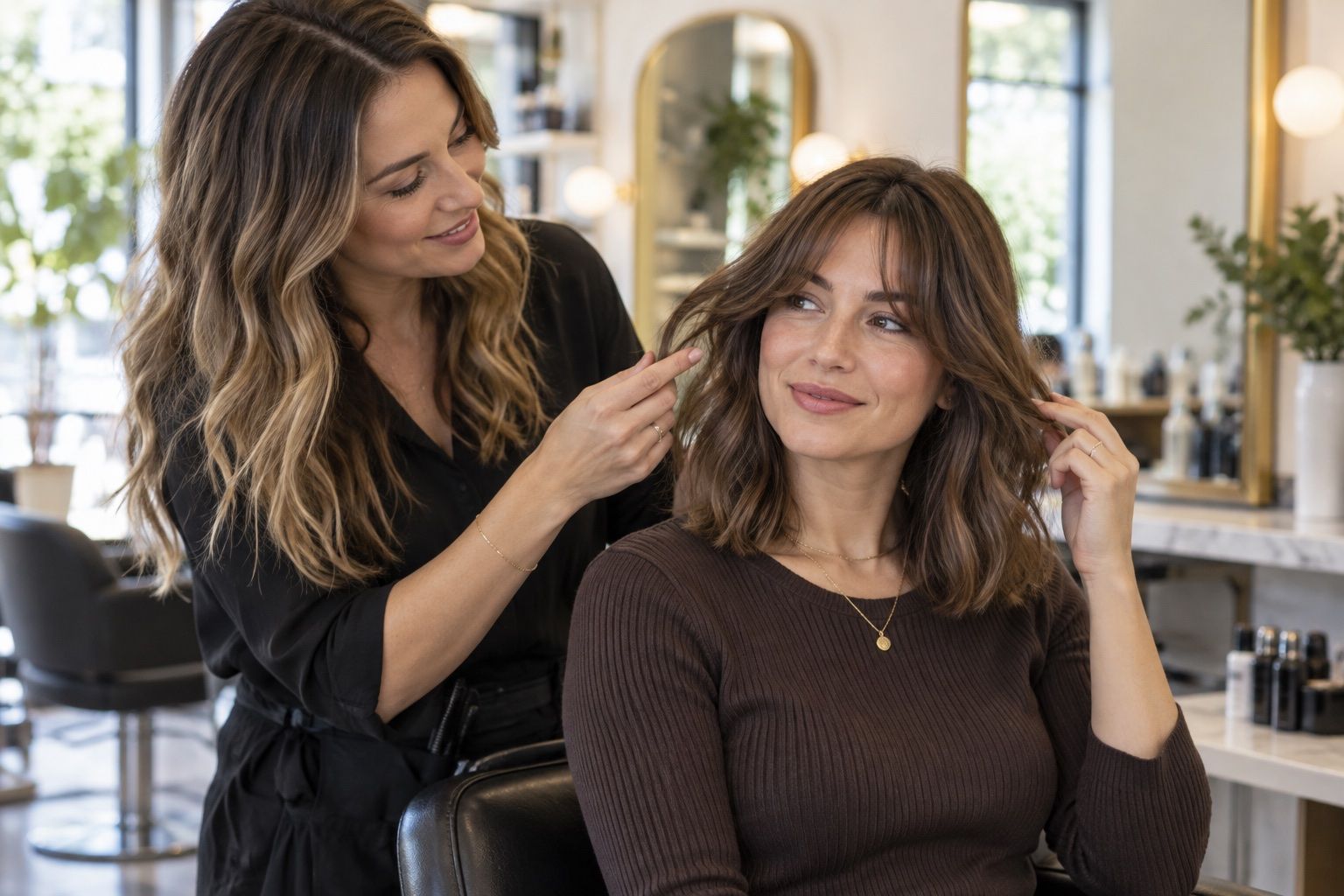
This guide looks at preview hairstyles on curly hair more realistically as a practical comparison, with attention to shape, texture and the choices to discuss before a salon visit.
Start with your curl pattern as it is
Photograph your hair in the state you wear most often: air-dried, diffused or styled with your usual products. A stretched or freshly brushed photograph may show a different length and outline from your everyday curls. If you are comparing a shorter cut, note how much your hair springs upward as it dries. A digital overlay may not reproduce that movement.
Use consistent light and camera distance, and include the full shape from crown to ends. Curly hair can cast shadows that make the hairline look different, so choose soft illumination rather than direct overhead light. If one side is more defined than the other, that is useful context rather than a flaw to hide. The goal is to preview your real routine, not an idealized texture.
Interpret length with shrinkage in mind
The visible length of curls can change when they are wet, stretched or dry. A try-on image may place the ends lower than your natural curl pattern will allow. Instead of relying on the pixel length alone, use landmarks such as the jaw, shoulder or collarbone and ask a stylist how the cut might sit when dry.
Compare two nearby lengths and discuss whether the longer version leaves room for shrinkage. The difference between a curl resting above the shoulder and reaching it can change how a style feels. A preview is not a measurement, but it can help you clarify the outline you want before a professional accounts for your individual curl and density.
Look at shape from several angles
A front view can show how curls frame the face, but it may hide the crown, sides and back. Bring a side or rear reference if volume distribution matters. Pay attention to whether you want a rounded silhouette, more height at the crown or less bulk near the sides. These shape choices are often more important than the label attached to a particular curl style.
Ask a stylist how the cut is shaped: wet or dry, in sections or curl by curl, and what the expected finish looks like. Techniques vary, and a photo cannot explain the process. The aim is to understand how the outline will behave when your curls are in their normal state, including how it changes as they grow.
Separate the cut from curl definition
A preview may show evenly defined spirals even if your real routine produces a mix of curl sizes or looser sections. Focus on the cut’s outline and framing rather than expecting the app to predict definition. If you like the overall shape, bring a separate photo of your own curl pattern and ask how the style can be adapted without forcing uniformity.
Consider product and drying time. A polished image may imply a routine involving sectioning, gel, diffusing or careful air-drying. If you prefer a faster approach, say so before choosing layers or fringe. Your desired finish should guide the cut conversation because the same shape may appear different depending on how much styling you plan to do.
Consider density and volume placement
Density changes how much space a curly style occupies. A layered cut can remove weight in one area and encourage movement in another, but the amount and placement must be tailored to your hair. A preview that adds uniform volume can hide the practical question of whether you want more lift at the crown or less expansion around the sides.
Show your stylist where your hair feels heavy or sparse and which areas you prefer to keep full. Describe how the shape behaves on humid days and between washes. These details are more helpful than asking for a named style without context. A picture can start the discussion, but your lived experience explains what the image leaves out.
Plan for wash day and grow-out
Ask what the haircut will require after washing and how it may change as it grows. Layers that create movement at one length can shift the balance later. A fringe may need extra attention if curls spring up. Understanding the maintenance helps you decide whether a dramatic shape is appealing in daily life, not just in a freshly styled photo.
If you want flexibility, discuss a gradual change that preserves enough length to adjust later. Bring photos of your hair on ordinary days and after styling so the stylist sees its range. A preview can help define the direction, while those real examples describe the texture and effort that the final cut needs to accommodate.
Make your reference specific
Save a preview with notes such as “keep the side volume,” “shorten the back but leave the front long,” or “avoid a fringe that springs above the brows.” Specific instructions help a stylist interpret the goal without assuming the simulated curls match your own. If a detail in the image looks artificial, name the shape you like instead.
Pair the digital image with a real photo of curls at a similar length and density. Point out differences in texture or styling and say which reference should guide each part of the cut. This can prevent an app-generated curl pattern from becoming an unrealistic expectation and gives your stylist room to shape the idea around your hair.
Consider how moisture changes the shape
Curls can respond to humidity, washing and product in ways a still preview cannot reproduce. The same cut may sit differently on a dry day than after a fresh wash. Tell the stylist what your hair does in ordinary weather and whether you want a shape that accommodates expansion or a more controlled silhouette.
If one section tends to shrink more than another, point it out before cutting. A digital image may show even length even when your curl pattern creates natural variation. Talk through where the outline should land when dry and how much definition or volume you actually want to maintain.
Mention any areas where curls form a different pattern, such as the crown, front hairline or nape. The stylist can use that information when planning the outline. A uniform digital curl overlay may hide these differences, so your account of how the hair behaves on wash day is an important part of interpreting the reference.